We already had the land.
Before the purchase, we checked the zoning plan.
Yes, building was allowed.
On paper, everything was fine.
What we didn’t fully see were the things that don’t show up on maps so easily.
The things you quietly accept
We knew there were no utilities on the land.
We knew access wouldn’t be perfect.
We knew it would need to be solved.
What we didn’t know yet was how hard it would be.
Pulling engineering networks over more than 200 meters isn’t just a technical issue.
It’s a mix of permissions, negotiations, terrain, money, time — and patience.
And then there’s the second layer:
not just bringing utilities to the land,
but distributing them within the land.
That part doesn’t look romantic at all.
Permits first, always
Before anything else, there were permits.
Forms, confirmations, waiting.
The kind of work that doesn’t leave marks in the soil,
only in your head.
It felt slow.
But it was necessary.
Only after that could we move on.
Water comes before walls
The first real physical step wasn’t a container.
It wasn’t a road.
It was water.
A well. A borehole.
But before you drill,
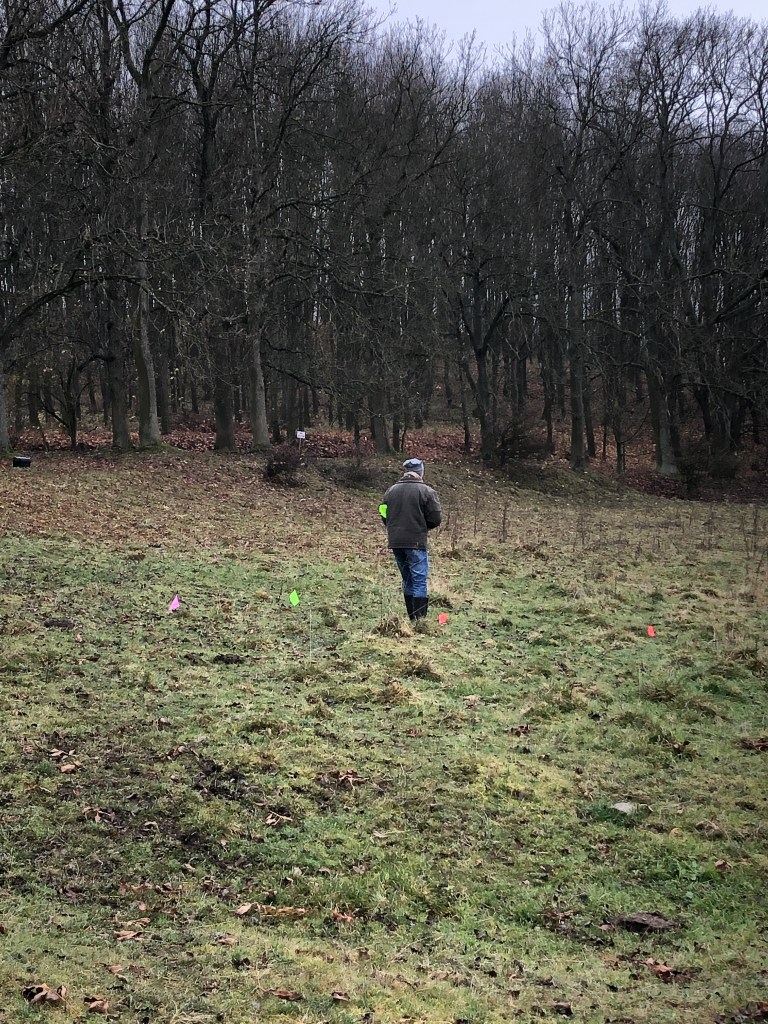
you call a dowser.
Someone who walks your land quietly,
holding rods,
listening to what can’t be measured precisely.
They tell you where the water might be.
You don’t know for sure.
You trust.
And you decide to try.
This is still the beginning
At that moment, nothing was built.
But a lot had already started.
Not with blocks,
but with choices.
Some clear.
Some uncertain.
Some made with eyes half-open.
And that’s okay.
This is not a story about construction.
It’s a story about everything that comes before it.
This wasn’t the hardest part.
It was just the first one.
 six-blocks
Leave a comment