I. Bringing Power
The nearest electricity connection was almost 200 meters away.
On paper, it sounded manageable.
In reality, it meant permits, approvals, coordination —
and trusting people with heavy machines to enter a place we love.
And then they came.
The quiet field turned into mud and movement.
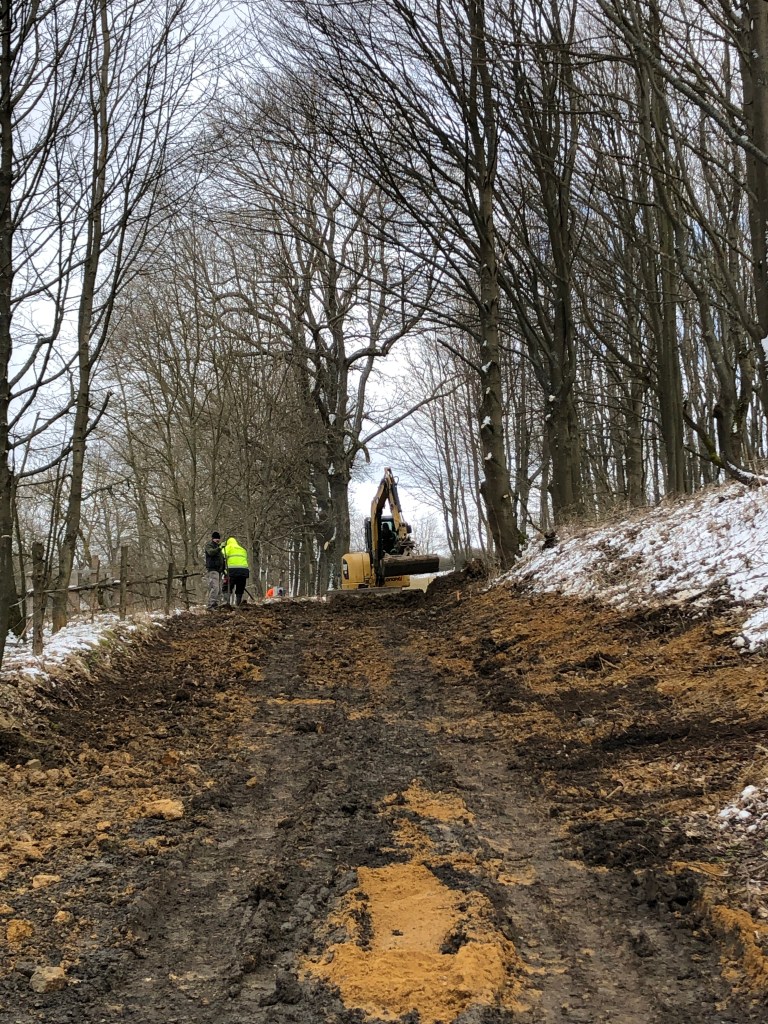
For a few days, it didn’t look like a dream anymore.
It looked like a construction site.
But it was necessary.
At the same time, the access road had to be reinforced
so trucks and materials could even reach the plot.
Truck after truck.
Gravel. Sand. Cables.
Two hundred meters of invisible connection.
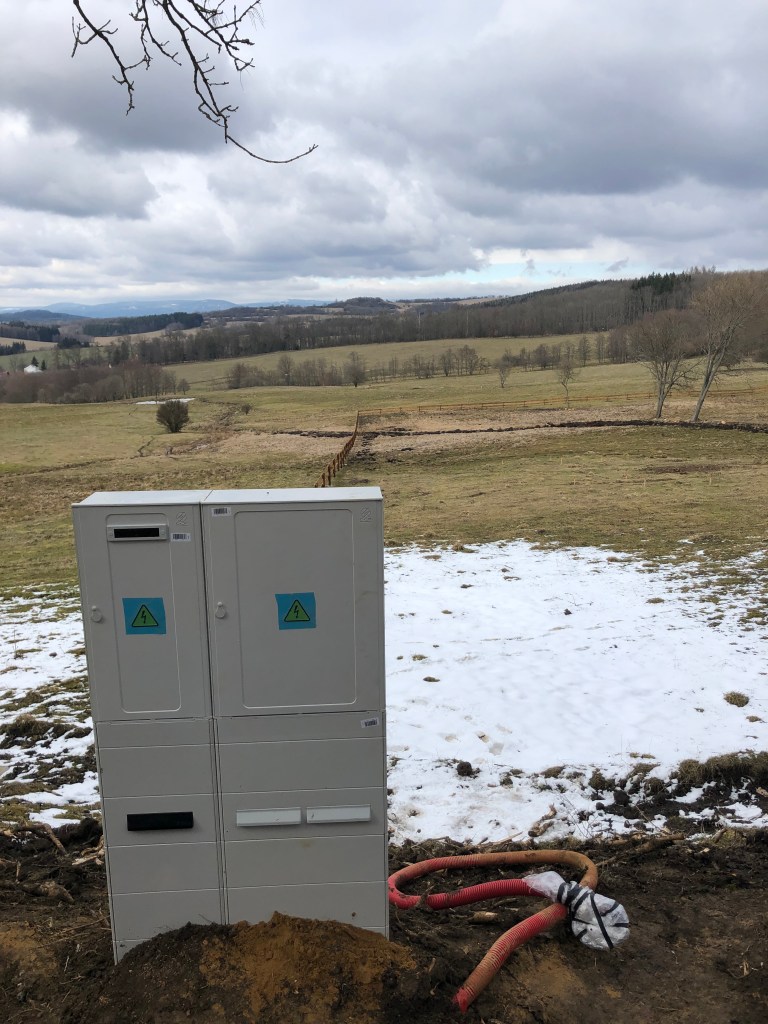
And then — the electrical cabinet stood there.
Simple. Quiet. Final.
That was the first shift.
II. Opening the Ground
But electricity was only the beginning.
Then came the rest.
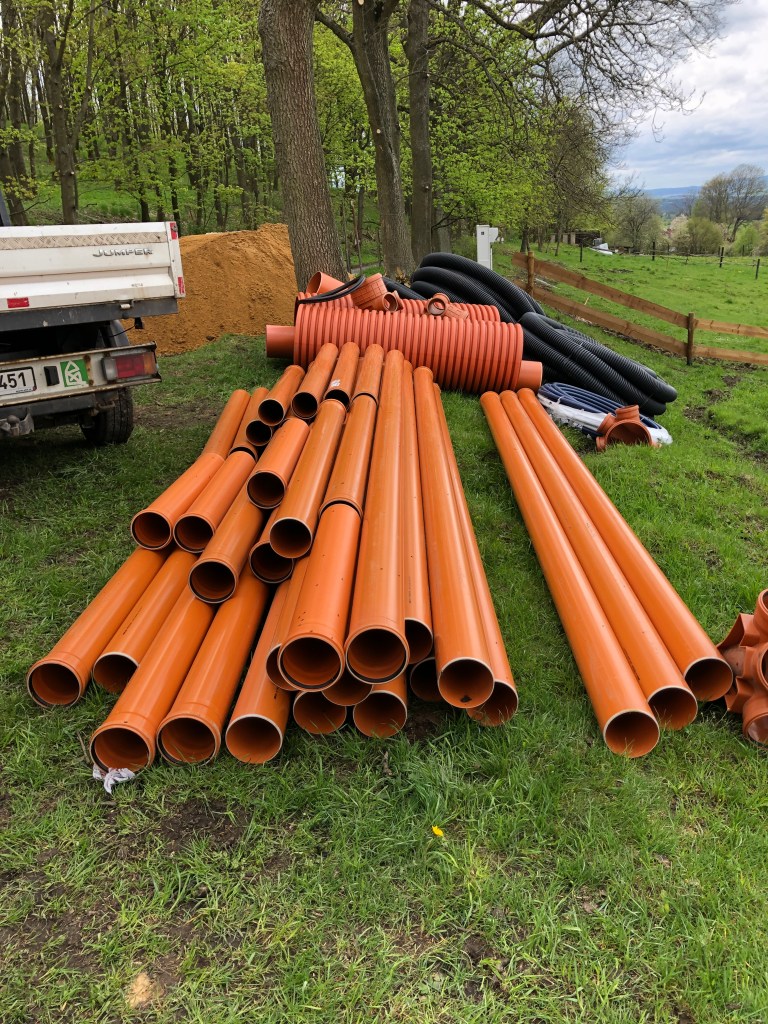
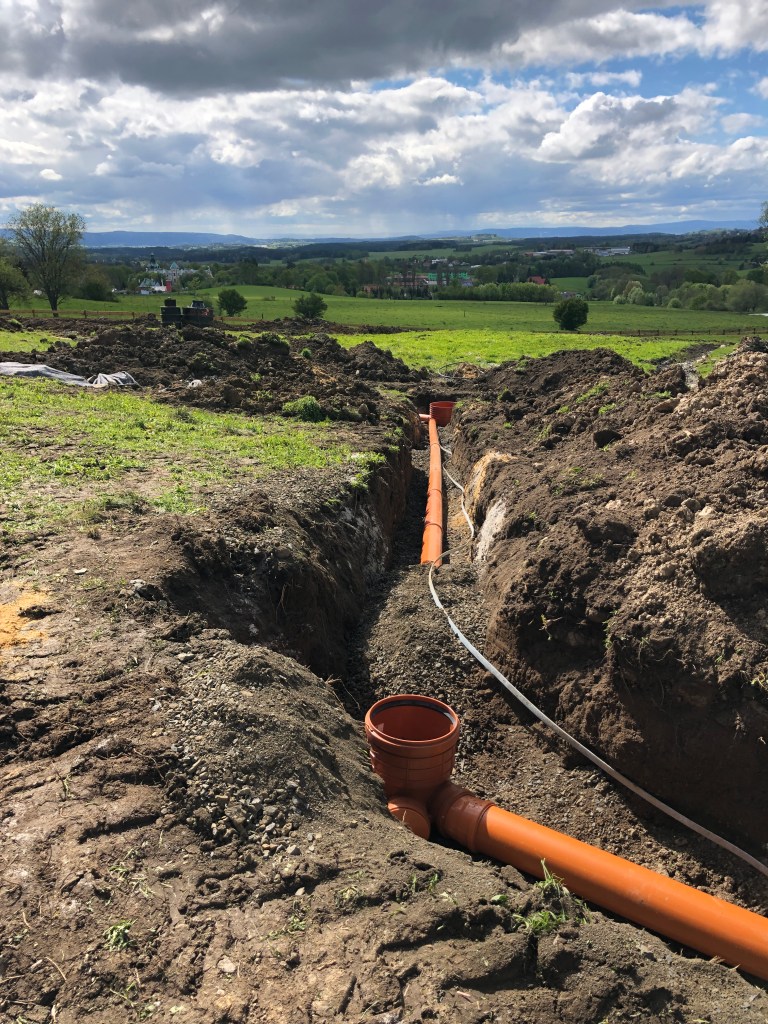
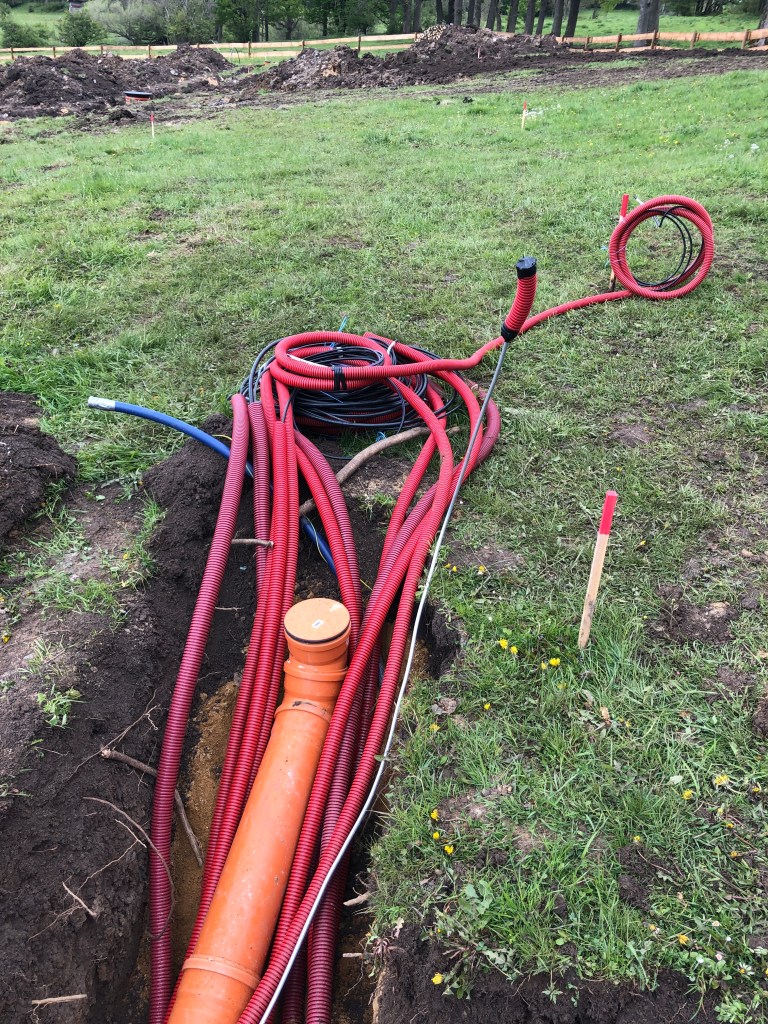
Pipes.
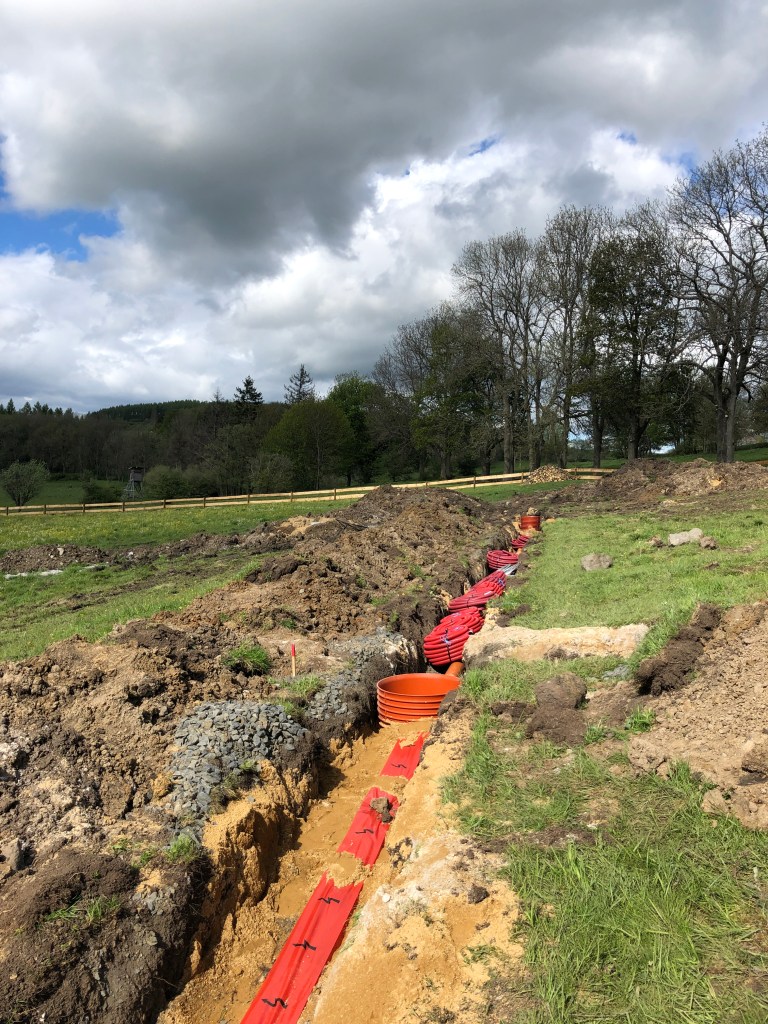
Drainage.
Infrastructure beneath the future.
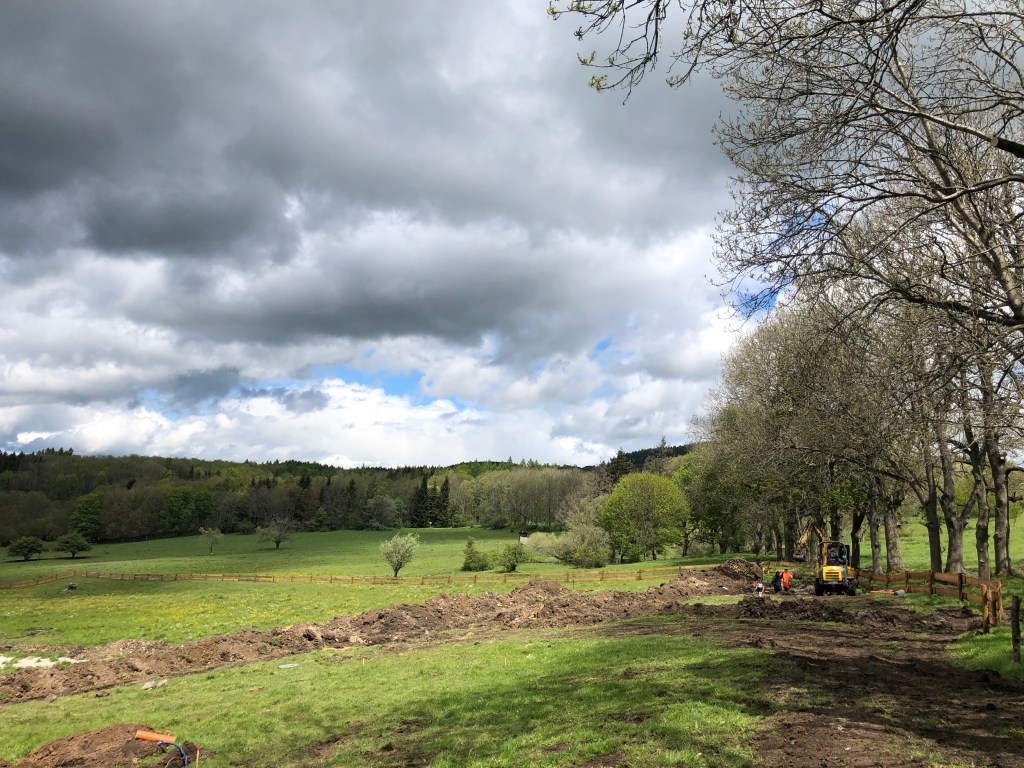
For a moment, the land looked wounded.
Long lines cut across the grass.
Excavators moving slowly through the field.
It became clear very quickly
that this land carries water in its own way.
The soil holds moisture.
Groundwater is strong.
So we added something we hadn’t fully imagined at the beginning:
Several drainage pits.
Small, invisible interventions
to help the land breathe and release excess water.
Not dramatic.
Not visible once finished.
But essential.
Because building here doesn’t mean forcing the ground —
it means learning how it works.
There’s something vulnerable
about watching the ground being opened.
You know it’s planned.
You approved it.
You paid for it.
And still — it feels personal.
III. The Septic Story
The land here is wet.
Very wet.
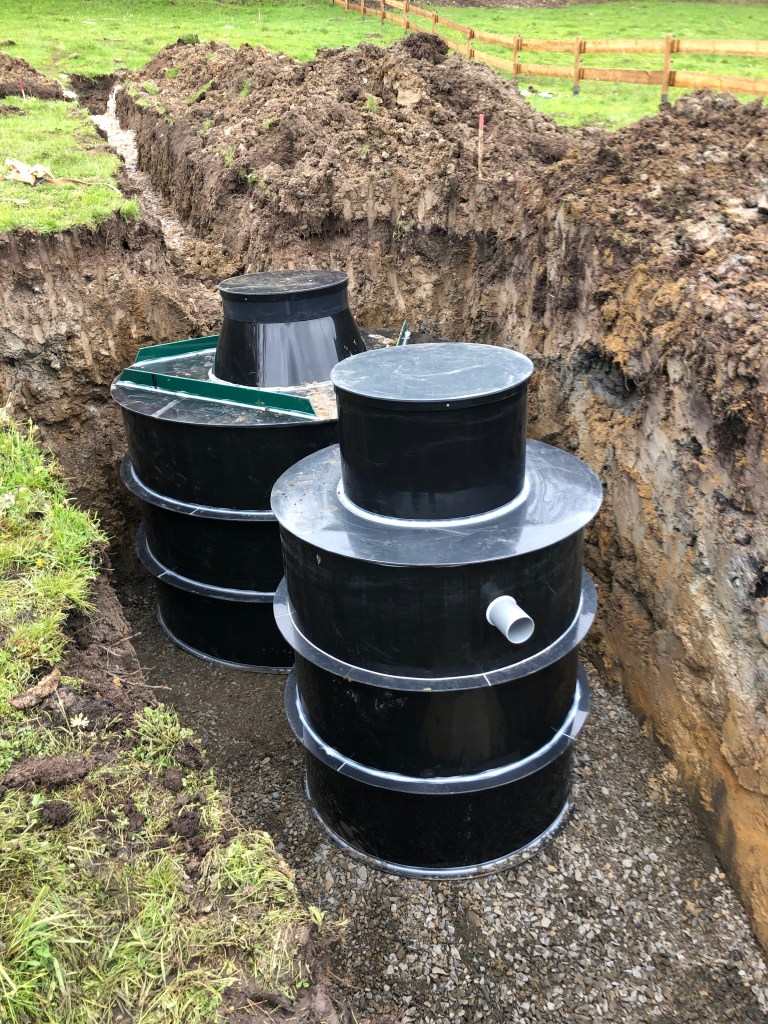
When the septic tank was installed, it had to be filled immediately.
We tried using the well.
Nothing.
For a short, quiet moment,
we thought:
Do we even have water?
The solution came unexpectedly simple —
firefighters with a water tank.
Problem solved.
Or so we thought.
Because the groundwater here is strong.
Strong enough to push the tank up.
It had to be done again.
And that was the moment we understood:
This land has its own rules.
IV. The Invisible Cost
This phase was expensive.
Very expensive.
And when it’s finished,
you barely see anything.
No walls.
No visible structure.
Nothing you could proudly show as “progress.”
Just a field.
But underneath, everything changed.
Electricity runs.
Water flows.
Drainage is placed.
Infrastructure is ready.
It doesn’t photograph well.
But without it, nothing else can exist.
V. When It Was Quiet Again
And then — suddenly —
it was quiet.
No machines.
No trucks.
No workers.
From a distance, the land looked almost the same.
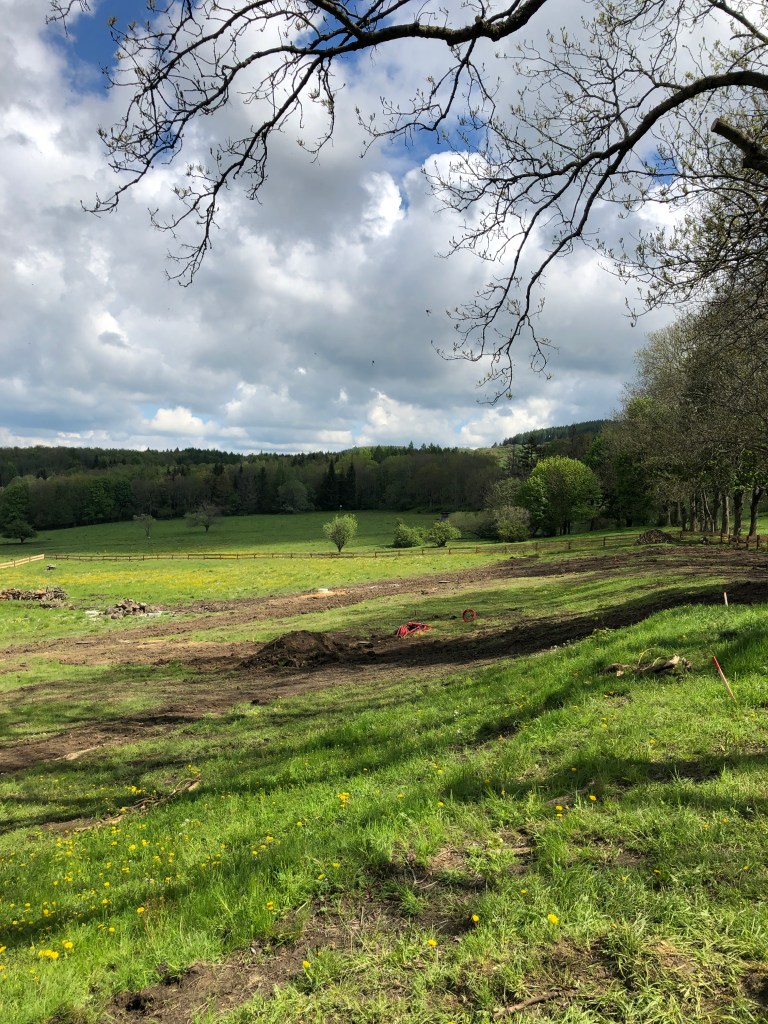
But it wasn’t.
Under this field now runs everything needed
for something that doesn’t exist yet.
The land is ready.
And so are we.
 six-blocks
Leave a comment